When communications fail during a search and rescue operation, the mission doesn't pause. Teams keep moving. Sectors keep expanding. And somewhere out there, someone is waiting on a decision that can only be made if command knows where everyone is.
Early in AT Labs' founder's exposure to emergency services, a responder was lost during an incident. It took days before he was found. By the time he was located, the outcome was already decided.
In a different world — one with persistent visibility and accountability even when conditions collapse — that outcome might have looked different. Not guaranteed. But different.
That is what AT Labs builds toward. Not a world where loss is impossible, but one where preventable loss becomes harder to accept — because the tools exist to close the gap, and using them is a form of responsibility.
If you see danger and refuse to act, that is failure. AT Labs builds to prevent that failure.
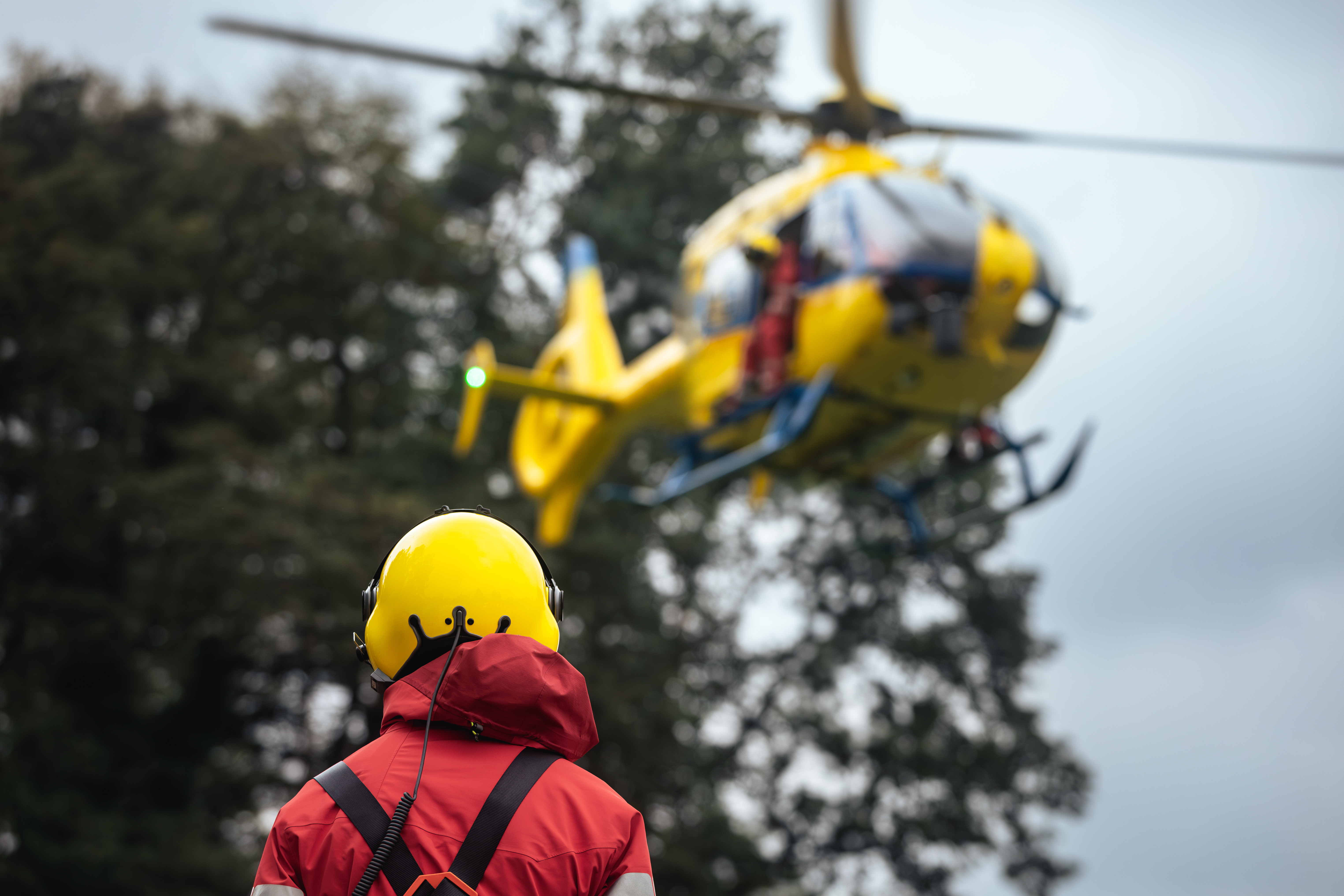
Degraded comms slow resource routing, slow task assignment, and slow the decisions that compress rescue timelines. Every minute of delay is a minute the victim doesn't have.
When command loses track of where responders are, safety and accountability break down simultaneously. Decisions get made on guesses. Teams move into areas no one knows about.
Manual accountability methods — boards, radio check-ins, paper logs — collapse at operational tempo. The picture gets stale. The margin for error grows.
Without a shared operational picture, teams search the same ground twice or leave sectors uncovered. In a survival scenario, that gap is the difference.
SAR operations don't fail in controlled conditions. They push into exactly the environments that conventional communications were never designed for — and the gear fails accordingly.
Coverage follows population, not terrain. Canyon walls, mountain ridges, dense vegetation, and hollow country all create dead zones in areas where SAR operations are most likely to occur.
In mass-casualty events and major disasters, cell infrastructure is simultaneously the most overloaded and most likely to be physically damaged — the moment the mission gets big enough to matter, the network gives out.
Infrastructure-dependent · Fails under load · Terrain-limitedSubscription costs run whether systems are used or not. Most configurations require clear sky view — functionally useless in canyon, canopy, or urban canyon environments.
Satellite comms also still depend on third-party infrastructure your team does not own or control. When the provider has an outage or prioritizes other traffic, you have no recourse.
Expensive · Sky-view dependent · Third-party reliantHobbyist LoRa boards and 3D-printed enclosures have moved mesh networking into the field, and they've proven the concept. But they are prototypes — fragile, inconsistent, and largely unsupported when something breaks mid-operation.
There is a significant difference between a proof-of-concept that works in good conditions and a tool you can trust when someone's life depends on the network staying up.
Fragile · Unsupported · Prototype-gradeAT Labs builds the gap-filler — rugged, subscription-free, out-of-box ready mesh communications designed for the environments where all three of the above break down.
AT Labs doesn't build radios and call it a communications solution. The system is designed as a complete capability stack — each layer supports the ones above and below it, and the whole thing operates without any dependence on external infrastructure. What you bring to the scene is what you have. It's enough.
The LoRa mesh backbone connecting field devices to each other and to command. Ad-hoc by design — no access points, no repeater infrastructure required. Messages, position data, and sensor traffic continue moving even as teams travel through terrain that kills conventional radio. Infrastructure nodes can be staged on ridgelines, vehicles, or forward positions to extend range as needed.
The TOC layer — a self-powered, vehicle-deployable platform running the TAK server, operational software, and the full software suite locally. No cloud. No internet required. The Response Crate brings up a complete command infrastructure the moment it's powered on, with fifteen radios charging simultaneously and the TAK server available within minutes of arrival on scene.
Real-time position and status visibility for every responder across the operational area. Command sees where teams are, where they've been, and whether they've checked in — continuously, not just when someone remembers to call. This is the layer that turns the mesh from a communications tool into an accountability tool.
A shared operational picture across ATAK, WinTAK, and iTAK — running locally without internet, kept current by the mesh below it. Command sees the search grid, team positions, and incident data in real time. SignalReach models repeater placement before the operation begins so optimal node positions are identified before boots hit the ground.
A system is only as effective as the team that operates it. AT Labs and Constellation Response provide direct technical support, training for agency personnel, and ongoing operational guidance to ensure systems are configured for your mission profile and your team is ready to use them when it matters. No support ticket queue. Direct access to the people who built it.
AT Labs systems are designed for the gap between "wheels stop" and "radios out." The operational requirement is simple: the network should be up before your first team clears the staging area. The deployment sequence is designed to make that happen.
The Response Crate fits in a truck bed, trailer, or vehicle interior. It deploys from wherever the mission puts you — no permanent installation, no infrastructure prerequisites. Power on and the server stack comes up automatically.
Every RM-2 in the system charges while stored. By the time briefing ends and teams are ready to move, radios are at full charge — pulled from the crate and clipped to kit, not scrambled from a table full of loose cables.
RM-1 and RM-2 infrastructure variants extend the mesh into terrain that field-portable units can't reach alone. Pre-sited during sector planning, they turn ridgelines and high ground into coverage assets — running on solar, requiring no maintenance during the op.
Every radio is a repeater. As teams push into the search area, they carry the network forward with them. Team positions update on the TAK picture in real time. Command has accountability without requiring field teams to stop and check in.
Additional teams slot into the existing mesh. More Crate Minis expand radio capacity. The system scales to the incident without requiring technical reconfiguration in the field — because in the field, no one has time for that.
Every AT Labs product is designed around a single operational requirement: the network stays up, and command always knows where the team is. These are the tools that make that possible.
Man-portable or infrastructure. 1W LoRa, 10,000mAh battery, IP-67 rated. Fits a standard radio pouch. Tested during Hurricane Helene. From $545.
View Specs → Next Generation2W output, American-made PCB, voice over mesh, IP-68. The backbone of every Response Crate deployment. Compatible with RM-1 infrastructure. From $795.
View Specs → Grab & GoFive RM-2s in a Pelican-style hard case with built-in charging cradles. Power on, pull radios, deploy. The right scale for smaller units and pilot programs. $7,500.
View System → Flagship SystemFifteen RM-2s, drop-in charging, onboard TAK server, XTOC software suite, offline mapping, weather integration, and ADS-B tracking — all in a single vehicle-deployable platform. Open it up, power on, track everyone. From $25,000.
View Full System →AT Labs was built on the conviction that every human life carries real value — and that if the tools exist to protect people in extreme situations, deploying them is a form of responsibility. This is not a hardware business dressed up in mission language. The accountability is genuine, the stewardship is deliberate, and the hardware reflects both.
Disasters do not care who you are or where you come from. When people need help, we show up — and we make sure the people going in to help them can be seen, heard, and brought home.